In the world of logistics and transportation, the weight of trailer trucks is a crucial factor that can significantly impact operations for business owners and fleet managers. Understanding the weight of a trailer truck goes beyond mere numbers; it influences transportation efficiency, operational costs, and compliance with federal regulations. Proper weight management can lead to optimal fuel efficiency, reduced wear and tear on vehicles, and improved safety on the roads. Moreover, compliance with weight regulations is not just a legal obligation; it can affect the reputation and profitability of a business. Fleet managers must ensure that their vehicles are within the legal weight limits to avoid hefty fines and operational disruptions. For those looking to deepen their understanding of regulatory compliance, learn more about tractor trailer weight regulations and ways to effectively maintain efficient logistics operations. By equipping themselves with knowledge about trailer truck weights, business leaders can make informed decisions that enhance both efficiency and success in their transportation endeavors.
Overview of Trailer Truck Specifications
When it comes to the logistics and transportation industries, understanding trailer truck specifications is crucial for business owners. This knowledge not only aids in compliance with regulatory requirements but also helps optimize operations for efficiency and safety.
Weight Classifications
Trailer trucks fall into various weight classifications based on their Gross Vehicle Weight Rating (GVWR). The classifications generally are as follows:
- Light-Duty Trucks: These trucks have a GVWR of up to 10,000 lbs. Common examples include light delivery trucks.
- Medium-Duty Trucks: Ranging from 10,001 lbs to 26,000 lbs, these trucks often serve regional deliveries and regional freight.
- Heavy-Duty Trucks: These trucks exceed a GVWR of 26,000 lbs. They are frequently employed in long-haul transportation and heavy freight applications.
Legal Limits by Region
United States
In the U.S., federal regulations established by the Federal Highway Administration set limits on vehicle weight. The maximum allowable weight is generally 80,000 lbs for trucks traveling on interstate highways, including the weight of the truck, trailer, and cargo. Additionally, many states have specific regulations that dictate weight limits, particularly for local roads. For a deeper look at these regulations, you can learn more about truck trailer weight regulations.
Europe
In Europe, weight regulations vary by country but are generally strict to improve road safety and infrastructure maintenance. The European Union mandates a maximum weight of 40 tons (approximately 88,000 lbs) for standard articulated vehicles. However, some countries allow heavier vehicles or special permits for certain types of freight. For a comprehensive guide, check resources provided by the European Union regarding transportation guidelines.
Asia
In Asia, specifications and regulations vary widely among countries. For example:
- India: The maximum allowable weight can range from 16 to 49 tons based on vehicle type and purpose.
- Japan: The standard maximum weight for trailer trucks is approximately 25 tons.
Many Asian nations are also evolving their regulations in response to international standards, aiming to enhance safety and reduce environmental impacts.
Conclusion
Understanding the specifications of trailer trucks-particularly their weight classifications and regional legal limits-is essential for business owners. Adhering to these parameters not only ensures compliance with the law but also enhances the efficiency of logistics operations. For further resources, you can explore how reliable cargo trucks can empower your B2B logistics business.
| Trailer Type | Weight Limit | Typical Uses |
|---|---|---|
| Flatbed Trailers | Up to 48,000 pounds | Transporting large, heavy equipment, machinery, or lumber requiring no overhead protection. |
| Dry Van Trailers | Around 45,000 pounds | Enclosed transport of goods needing protection from weather and theft. Commonly used for retail goods. |
| Refrigerated Trailers | Around 45,000 pounds | Transporting perishable food items and pharmaceuticals that require temperature control. |
| Tanker Trailers | 40,000 to 43,000 pounds | Carrying liquids, including hazardous materials and fuel. |
| Lowboy Trailers | 40,000 to 50,000 pounds | Used for transporting oversized and heavy equipment with a low height requirement. |
This table provides a useful overview for business owners considering different types of trailer trucks for their cargo needs. For more information about the weight regulations and compliance aspects, you might find this blog post helpful: learn more about weight regulations.
The Impact of Weight on Fuel Efficiency in Trailer Trucks
As a business owner in the logistics sector, understanding how weight affects your trailer truck’s fuel efficiency is critical for managing costs effectively. The weight of a truck not only influences its operational capability but also significantly affects how much fuel it consumes.
Weight and Fuel Consumption
Research consistently indicates that heavier trucks exhibit reduced fuel efficiency. The relationship between weight and fuel consumption is quite linear: for every extra pound of cargo, the fuel consumption must increase to compensate for the additional load. Depending on the type and model of the truck, the average reduction in fuel efficiency can range from 0.5% to 2% for every 1,000 pounds added.
For instance, if a trailer truck has an average fuel economy of 6 miles per gallon (MPG) at a weight of 60,000 pounds, adding an additional 1,000 pounds could lower its fuel economy to approximately 5.8 MPG.
Real-World Implications
A vital study highlighted that reducing the weight of a truck by just 10% can lead to fuel savings of approximately 5-10%. This translates into significant savings over time, particularly with rising fuel prices. Considering the incorporation of lightweight materials and technologies can also aid businesses in balancing product load with fuel efficiency.
Cost Implications
The fuel costs can dramatically affect your overall operational expenses. Here’s a brief table demonstrating the potential cost implications based on fuel efficiency drops:
| Weight Increase (lbs) | Decrease in MPG | Estimated Annual Fuel Cost Increase* |
|---|---|---|
| 1,000 | 0.2 | $1,200 |
| 2,000 | 0.4 | $2,400 |
| 5,000 | 1.0 | $6,000 |
*Assuming a cost of $4 per gallon and 120,000 miles driven annually.
In addition to immediate cost savings, reducing truck weight can enhance payload potential, enabling more efficient logistics operations. Businesses can learn more about cargo management to make better decisions regarding weight management.
To summarize, every pound counts when it comes to fuel efficiency. By strategically managing weight, companies can realize extensive savings in fuel costs, which in turn can significantly benefit the bottom line. For further regulatory context and to ensure compliance, check out weight regulations that impact fuel efficiency in your operations.

Understanding the regulations governing trailer truck weights is crucial for business owners in the transportation and logistics industry. These regulations not only ensure safety on the roads but also affect operational costs and efficiency. This section outlines both federal and state regulations, while highlighting recent trends and updates in the legislation.
Federal Regulations
The Federal Highway Administration (FHWA) enforces regulations regarding maximum weight limits for trailer trucks. The standard maximum weight allowed for a tractor-trailer combination on interstate highways is 80,000 pounds. This limit includes the total weight of the vehicle and any cargo it carries. The federal laws also establish specific limits on axle weights to prevent road damage and ensure safety.
State Regulations
While federal regulations provide a baseline, individual states may impose stricter regulations. Here are some examples:
- California: Imposes weight limits based on the configuration of the truck, with particular emphasis on weight per axle to ensure road safety.
- Texas: Allows larger weights on designated roads and provides options for special permits for overweight vehicles when necessary.
Each state’s Department of Transportation usually details specific weight limits, including the regulations regarding permits for overweight loads.
Recent Trends and Changes
Recently, there has been a trend toward revising weight regulations in many states to accommodate larger vehicles and the growing demands of the freight industry. Furthermore, the adoption of advanced technologies in trucking may lead to more dynamic regulations, such as:
- Increased use of telemetry: Tracking vehicle weight in real-time to enhance compliance without stopping trucks for manual inspections.
- Flexible permits for heavier loads: As freight demand increases, states may offer more flexible permitting options for trucks exceeding standard weights.
Business owners should stay informed about these regulations as they can have significant implications for operational costs, fleet management, and overall logistics strategy. Companies like Truck Trailer MFG provide resources that can help navigate these regulations effectively.
For further insights into how to optimize your fleet and meet regulatory standards, consider reading more about reliable cargo trucks.
Overall, staying updated on both federal and state regulations regarding trailer truck weights is vital for ensuring compliance and efficiency in your business operations.
By adapting to these regulations, business owners can mitigate risks and improve their logistics strategies, thereby enhancing their competitive edge in the market.
Best Practices for Maintaining Proper Weight Compliance
Business owners in the trucking industry can implement the following best practices to ensure their vehicles are not overloaded:
- Regular Weight Checks: Utilize portable scales or weigh stations to regularly check the weight of your trucks and trailers.
- Training and Awareness: Conduct training sessions for drivers and staff about the importance of weight compliance and the associated regulations. Understanding these guidelines helps reduce the risk of overload significantly.
- Load Distribution: Ensure the load is distributed evenly across the axles. Uneven distribution can lead to increased wear and tear, as well as compliance issues.
- Monitor Load Limits: Always adhere to the manufacturer’s recommended weight limits for vehicles and trailers. This information is usually specified in the owner’s manual or can be found on the manufacturer’s website.
- Utilize Technology: Implement onboard weighing systems that alert drivers in real-time when they are approaching weight limits.
- Schedule and Plan Loads Wisely: Avoid last-minute loading which can lead to rushed decisions and overloading. Schedule deliveries and carefully plan the cargo to ensure compliance before departure.
- Stay Informed: Regularly review weight regulations and any changes in local, state, or federal guidelines to remain compliant.
- Use Reliable Equipment: Invest in quality trucks and trailers specifically designed to handle your cargo without exceeding weight limits. For more information on reliable cargo options, check out this link.
Implementing these best practices not only promotes safety and compliance but also contributes to efficient and sustainable business operations in the trucking industry.
Correlation Between Truck Weight and Maintenance Costs
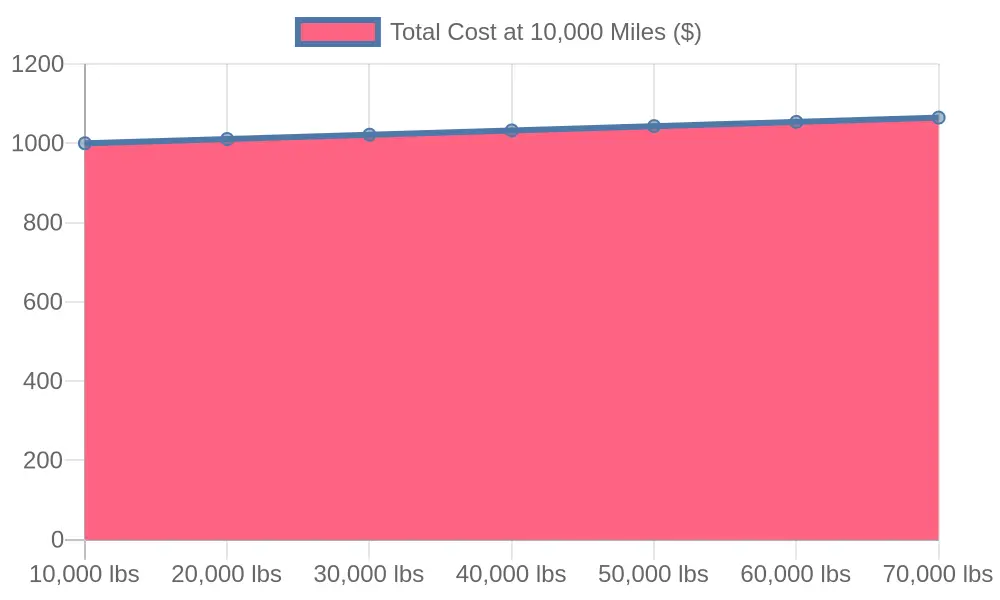
The relationship between truck weight and maintenance costs is significant. Heavier trucks often incur greater expenses not only in terms of fuel but also in maintenance and repairs. Based on recent studies, maintenance costs rise by approximately 10 cents per mile, with an additional increase of 0.108 cents per mile for every 1,000 pounds of gross vehicle weight.
This correlation indicates that carefully managing the weight of trucks can lead to substantial savings in operational costs, which is crucial for business owners looking to optimize their logistics. Below is a chart that illustrates the relationship between truck weight and maintenance costs over time:
Key Takeaways
- Weight Management: Keeping trucks within recommended weight limits helps reduce maintenance costs.
- Cost Implications: Minor breakdowns associated with heavier trucks can be economically detrimental, with costs reaching between $400 to $600 for repairs.
For more insights on how truck weight impacts your business, consider reading our article on tractor-trailer weight regulations.
The Importance of Weight Monitoring in Trailer Truck Operations
Monitoring the weight of trailer trucks is essential for effective fleet management, with experts highlighting several key benefits.
“Effective weight management strategies are crucial for fleet operators, enhancing safety, fuel efficiency, and compliance with weight regulations. By implementing regular load weighing, monitoring weight distribution, and utilizing training programs, companies can drastically reduce operational costs.”
- Industry Expert, Fleet Management Consultant
Moreover, ensuring compliance with weight limits not only safeguards the safety of drivers and other road users but also enhances overall operational efficiency.
“Overloading can lead to both safety hazards and increased costs due to potential penalties. Monitoring weights allows for better load distribution, which in turn improves vehicle performance and fuel economy.”
- Transportation Safety Analyst
These insights underline the significance of integrating weight monitoring into fleet operations, which can ultimately lead to better logistics outcomes and enhanced safety in transport operations.
Conclusion and Call to Action
In conclusion, the importance of managing trailer truck weight cannot be overstated for business owners in the transportation industry. By ensuring compliance with legal weight regulations, prioritizing safety, and optimizing operational efficiency, companies can minimize risks and enhance profitability. Proper weight management not only helps in avoiding costly fines and legal complications but also contributes significantly to the longevity of the vehicles and overall business success. Moreover, efficient weight management can lead to lower fuel consumption, which directly impacts operational costs and carbon footprint, making it easier for businesses to thrive in a competitive market.
For business owners looking to enhance their operational standards, we encourage you to reach out for specialized support and resources. Whether you need assistance understanding the complexities of tractor trailer weight regulations or wish to invest in reliable vehicles, our team at Truck Trailer Manufacturing is here to help you navigate these essential aspects of your trucking business. Don’t hesitate to contact us today to ensure that your operations are safe, compliant, and efficient!