Why Frame Cracks and Tire Date Codes Decide the Price
Two used trailers can sit side by side, look nearly identical, and still be worth thousands of dollars apart. The gap usually comes down to two things you won’t see at a glance: frame cracks and tire date codes. Both tell you more about real value than mileage, paint, or polished aluminum.
A trailer’s frame carries the payload and absorbs every bump, turn, and hard stop. A crack is not cosmetic wear; it marks a spot where repeated stress has fatigued the steel, and cracks spread rather than heal. A weakened frame can flex, sag, or fail under load, putting the cargo, the driver, and everyone else on the road at risk. Repair is rarely cheap, and some cracks mean the unit should never haul again.
Tire date codes point to a different kind of hidden cost. Every tire sold in the United States carries a DOT code, and the last four digits give the week and year it was made. The problem is tire aging: rubber hardens and sidewalls weaken with time even on a trailer that barely moves. A tire can show healthy tread depth and still be years past its safe service life, which becomes an unavoidable replacement bill the moment you take ownership.
The two price drivers, in short:
- Frame cracks = structural risk. They signal fatigue, cut load capacity, threaten safety, and can turn a bargain trailer into a liability or a write-off.
- Tire date codes = hidden replacement cost. Old tires with good tread still need replacing soon, adding hundreds or thousands in costs the seller’s price never mentions.
If you want to negotiate from strength, learn how to evaluate a used trailer before you buy. Inspect the frame first, read every tire date code second, and let those findings set your offer.
Once you have both numbers, line up a few candidates and compare them side by side. It is much harder to miss the true cost of a trailer when it sits next to another one.
Inspection Factors That Decide the Asking Price
A used trailer rarely fails on a single flaw. Price gets negotiated line by line, where a light rust patch is just a talking point and a hairline crack near a weld can stop the deal cold. The table below covers the documented-evidence stage of an inspection: the point where you photograph each finding and match it to a real repair or risk cost.
| Inspection Factor | What to Look For | Typical Price Impact | Repairability |
|---|---|---|---|
| Minor surface frame rust | Light flaky oxidation on web or flange, no pitting or metal loss | Small reduction, roughly 2-5% of asking price | Easy; clean and recoat |
| Hairline frame crack near a weld | Thin crack in the heat-affected zone beside a weld toe | Moderate to steep reduction, 10-20%+; signals fatigue | Hard; needs certified weld and re-inspection |
| Cracked crossmember | Fracture or separation in a floor or outrigger support | Moderate reduction, 5-15% | Moderate; weld or bolt-in replacement |
| Tire date code over 7 years | DOT stamp (last 4 digits = week and year) past 7 years | Notable reduction; priced as near-term replacement | Irreversible; only replacement fixes age |
| Mismatched tire age across axles | Mixed date codes or brands across duals and axles | Small to moderate reduction, 3-10%; wear and handling risk | Manageable; matched set needed |
| Tire tread depth | Groove depth measured in 32nds against legal minimums | Proportional to remaining life; worn sets cut value | Irreversible; worn tires are replaced, not repaired |
Turning Findings Into Leverage
Bring this table to the yard and use it to anchor your offer in evidence rather than opinion. Photograph every item, record the date code on each tire, and ask the seller for maintenance records that back up any repair. A documented finding carries far more weight at the negotiating table than a hunch.
Price impact also stacks. A trailer with one overage tire is a small deduction; the same trailer with mismatched tires across every axle and a cracked crossmember can lose a quarter of its value before you ever discuss the frame. Documenting each finding turns scattered observations into one clear, defensible number.
When you are ready to weigh these findings against the rest of a purchase, it helps to see the whole truck trailer for sale picture before you commit.
Identifying Frame Cracks: The Inspection That Decides the Deal
A trailer’s frame carries every pound of cargo you will ever haul, so frame cracks are a safety and cost problem, not a cosmetic one. Learning to spot them before you sign the paperwork gives you real leverage at the negotiating table, because a photographed crack is exactly the kind of evidence that justifies a price deduction later.
Where Frame Cracks Commonly Appear
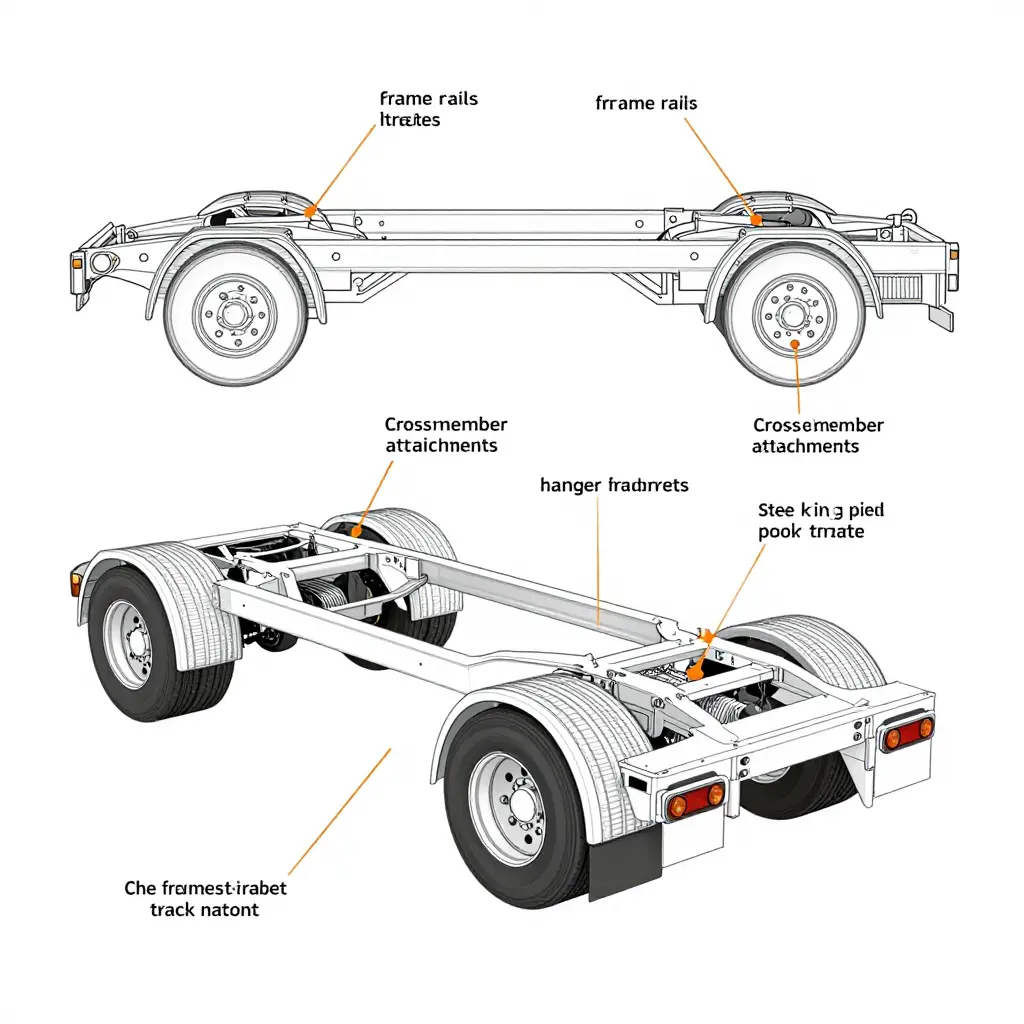
Cracks rarely appear at random. Structural fatigue concentrates at high-stress points, so inspect these zones first:
- Frame rails – The main longitudinal beams flex constantly under load. Check the bottom flange and the section directly above the suspension, where bending stress peaks.
- Weld joints – Every weld is a potential weak point. During weld inspection, look for small hairline fractures running along or just outside the weld toe.
- Crossmember attachments – Where crossmembers meet the frame rail, vibration and torsion can open cracks at the connection flanges.
- Spring hanger areas – Spring hangers transmit road shock straight into the frame. Cracks here often radiate outward from bolt holes.
- Kingpin plate region – The kingpin plate takes the entire turning and braking load of the tractor. Inspect the plate, its welds, and the surrounding rail section carefully.
Surface Rust vs. Structural Fatigue
Not every orange streak means trouble. Light, even surface rust on a frame rail is usually cosmetic and only matters once it has eaten into the steel. The real warning sign is rust staining – a vertical streak of fresh brown weeping from a joint or weld. That staining often means moisture and water are moving through an active crack, keeping the steel wet and accelerating corrosion. Add a visible jagged line in the metal, and you have strong evidence of a load-bearing crack rather than harmless surface rust.
Tools and Techniques for the Inspection
You do not need a laboratory. A few simple habits catch most problems:
- Visual scanning: Walk the full length of both frame rails slowly, looking for dark lines, jagged edges, or paint that has cracked along a straight line.
- Flashlight raking: Hold a bright light at a low, shallow angle to the steel. Raking light casts shadows that make hairline cracks stand out where a straight-on view hides them.
- Rust staining check: Trace every brown streak back to its source. If it starts at a weld or bolt hole, look closely.
- Tap test and magnification: Tap suspect areas with a small hammer; a dull thud instead of a clear ring can hint at a fractured section. A magnifying glass or phone macro lens helps confirm what you suspect.
Document every finding with photos and measurements. That record is what supports a price deduction later, and a dated photograph is far harder for a seller to argue with than a hunch. To compare this against the rest of the buying process, review our guide to inspecting a truck trailer for sale before you commit.
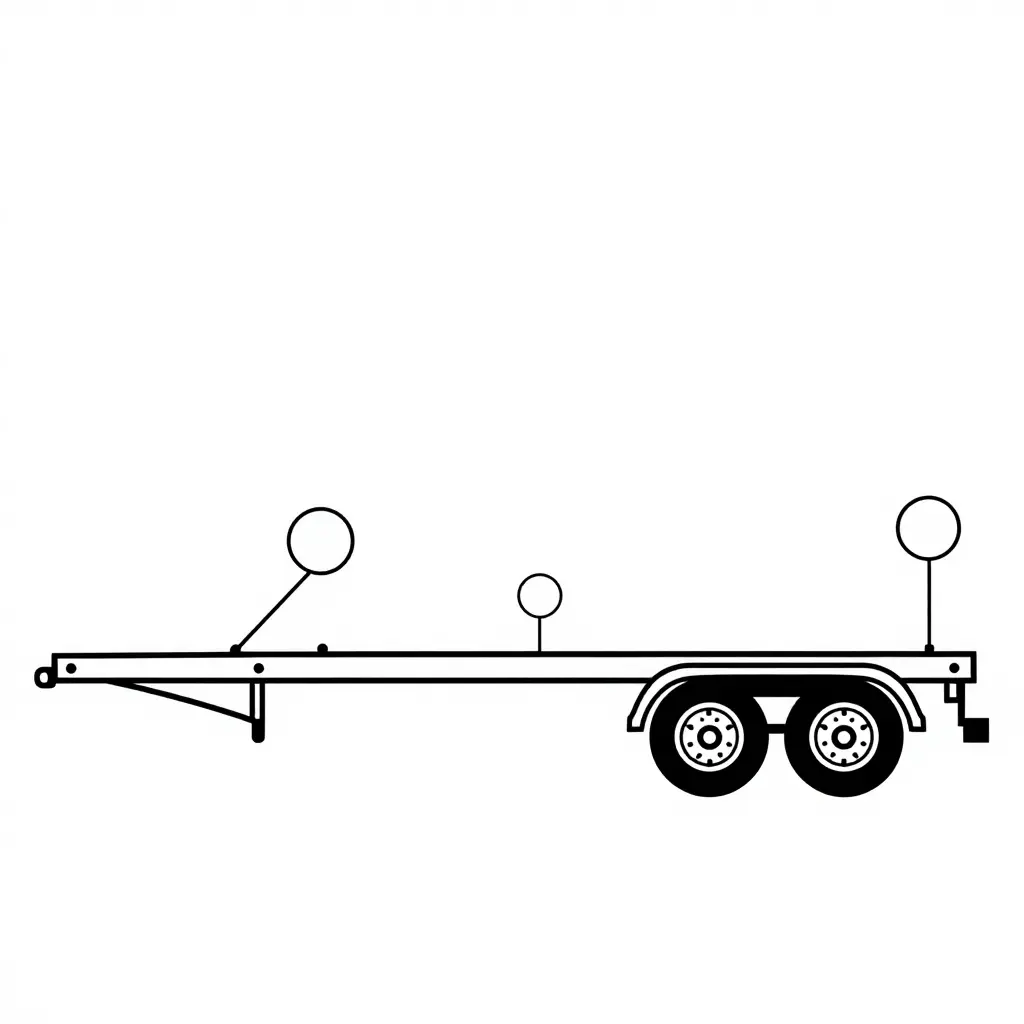
Use the diagram above as your visual checklist: the plain circles mark the spots where frame cracks most often start, so you can work through each zone in order during a walk-around. If you are still comparing units before you commit, start with this guide on truck trailer for sale to line up the inspection steps with your buying budget.
From Crack to Cash: How a Frame Defect Becomes a Price Deduction
Every disciplined pre-purchase inspection follows the same chain of reasoning. An inspector does not glance at a crack and blurt out a discount. They build a case, step by step, until the defect carries a defensible dollar figure.
Locate the crack. The walk-around starts at the highest-stress junctions: where the kingpin plate meets the main beam, the crossmember welds, and the lower flange near the landing gear. A used trailer that has hauled overloaded freight for years often reveals hairline fractures here first.
Assess severity and location. A two-inch surface crack on a web is minor; a crack running through the bottom flange of a main beam is structural. The inspector records length and depth, checks for rust bleed and crack propagation, and sorts the defect into either a high-stress zone or a low-load area.
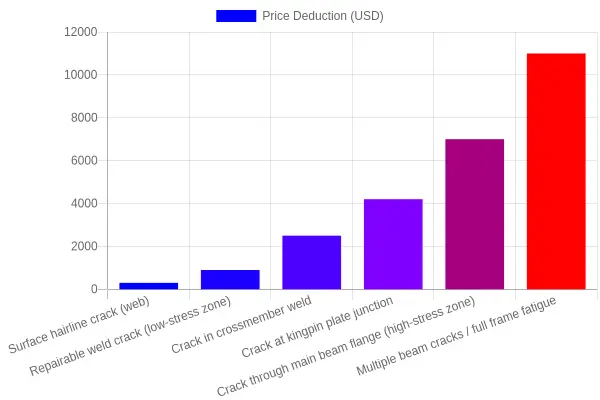
Determine repair feasibility and cost. Then comes the blunt question: can this be welded, or must the beam be replaced? A certified weld repair might run $400-$1,500, while a full beam replacement can climb past $6,000. That repair cost becomes the anchor for everything that follows.
Apply against the asking price. Finally, the inspector subtracts the projected repair cost, adds a risk premium for future fatigue, and presents a counter-offer. Every documented dollar of damage becomes real negotiation leverage.
The deduction factors typically stack like this:
- Crack location (high-stress junction vs. neutral zone)
- Crack length, depth, and whether it is propagating
- Number of affected crossmembers or main beams
- Estimated repair or full replacement cost
- Residual structural risk and resale or insurance impact
This is where the sequence pays off. A repairable weld crack is far kinder to a trailer’s value than a crack in a high-stress region. A clean weld crack in a low-load area may cost only a few hundred dollars to fix and leaves most of the unit’s worth intact. A crack through a high-stress region, by contrast, signals fatigue spreading across the whole frame. That drags value down by thousands and can make the trailer uninsurable without a full structural certification. Inspectors who understand structural compliance and the hidden costs of ignoring it treat this distinction as the difference between a bargain and a money pit.
An itemized inspection is what turns vague worry into concrete bargaining power. The chart below puts a price impact on each defect type.
The Numbers: What Frame Cracks Actually Cost You
Frame damage is one of the most expensive variables in trailer negotiations, and the deduction scales fast. A trailer with clean rails delivers full book value, but each step up the severity ladder erodes your position. The chart below converts that reality into hard percentages, so you can walk into a truck trailer for sale listing knowing exactly what to dock.
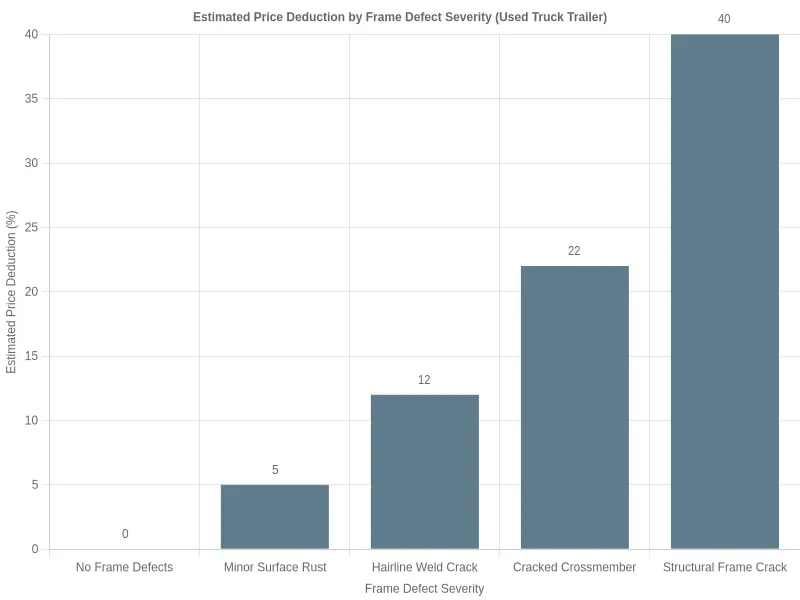
Reading the Deductions
- No frame defects (0%): The baseline. Cosmetic wear is fine; structural integrity is intact.
- Minor surface rust (5%): A light negotiating chip, not a deal-breaker, unless it has started to pit the steel.
- Hairline weld crack (12%): Now you are paying for a certified repair weld and a reinspection.
- Cracked crossmember (22%): Load distribution is compromised, and downtime for shop repair is real money.
- Structural frame crack (40%): A major red flag. This typically means rejection at inspection or a full frame section replacement.
The curve climbs sharply past the midpoint because the deeper the crack, the more it touches the trailer’s capacity rating. A structural crack along the main rail can undermine the load rating your operations depend on, which is why the deduction jumps from 22% to 40% rather than stepping up gradually. When two units look similar on the lot, this chart often explains a five-figure price gap.
Use It as a Negotiation Tool
Bring a magnet, a bright flashlight, and a tape measure. Measure crack length, photograph the weld quality, and match what you find to the bands above. If a seller insists a cracked crossmember is “no big deal,” the chart gives you a defensible counteroffer instead of a gut feeling. The percentage is not a law of nature, but it is a fair starting point that keeps the conversation on repair costs and residual value rather than emotion.
Reading Tire Date Codes: The Sidewall Secret Most Buyers Miss
Before you hand over money for a trailer, learn to read tire date codes. It is one of the fastest, cheapest checks you can run, and it often turns up thousands of dollars in costs that a shiny tread and a fresh wash job can hide.
What the DOT Code Tells You
Every tire sold in the United States carries a DOT code, a string of characters molded into the rubber by the manufacturer. The code indicates that the maker certifies the tire meets federal safety standards, and for a buyer it does something more useful: it ends with the manufacturing date. The first characters identify the plant; the final digits hold the answer you actually care about.
Where to Find the Sidewall Date
The full code, including the date, appears on only one sidewall; the other side may show a partial code. That means checking both sides of every tire, and on a mounted trailer tire one of those sides is the inner face. Look for the raised letters “DOT” followed by a group of numbers. Only one group ends in a four-digit string.
Decoding the Four-Digit Number
The last four digits are simple once you know the rule. The first two are the week of manufacture, and the last two are the year.
| Four-Digit Code | Week of Manufacture | Year | Age (as of 2025) |
|---|---|---|---|
| 3521 | 35th week (late August) | 2021 | About 4 years |
| 0823 | 8th week (late February) | 2023 | About 2 years |
| 1219 | 12th week (late March) | 2019 | About 6 years |
So a tire stamped 3521 was built in the 35th week of 2021. Tires made before 2000 used a three-digit code, so be cautious if you cannot find four digits at all.
Why a New-Looking Tire Can Be Structurally Aged
Rubber degrades from the inside out, even when a tire is never driven. UV light, ozone, heat, and time harden the compounds and weaken the internal belts. A tire can show deep tread and clean sidewalls while its casing is quietly cracking. That is tire aging: invisible to the eye, very real under a load. Judge a tire by its date code, not its looks.
The Hidden Costs of Old Tires
Old tires add immediate hidden costs to any truck trailer for sale. Aged rubber raises the risk of blowouts, which means roadside downtime, damaged cargo, and potential liability. Regulators and many insurers also question tires past a recommended service window, so you may face failed inspections or higher premiums. Budget for replacement before you buy, and price the trailer accordingly. A cheap rig with six cracked, decade-old casings is rarely a bargain.
Decode a Tire Date Code in Five Steps
The tires on a trailer often say more about how it was used than the odometer does, and the DOT date code is the fastest way to check. Whether you’re comparing used units in a truck trailer for sale listing or walking a dealer lot, here’s a quick field reference you can run in seconds.
- Locate the DOT code on the sidewall. Scan for the letters “DOT” on the outer sidewall. It sits inside a long string of characters and is your starting point.
- Find the final four digits. At the very end of that string is a grouped four-digit number; that group alone tells you the tire’s true age.
- Read the first two digits as the week. These two numbers (01 through 52) mark the week of the year the tire was manufactured.
- Read the last two digits as the year. The final pair is the year of production – “21” means 2021, “19” means 2019.
- Calculate the tire’s age. Subtract the code year from the current year, then refine by the week to land on an accurate age in years.
Worked example: A code ending in 3521 was built in week 35 of 2021 – roughly four years old today.
Deduction trigger: As a rule of thumb, tires past the recommended replacement window – commonly 5 to 7 years, depending on the maker – justify a price deduction, and anything past 10 years should be priced as a replacement cost rather than usable rubber.
How Tire Age Affects Trailer Valuation
When you shop for a truck trailer for sale, the tires are often the most expensive wear item on the rig. Their age, not just their tread depth, changes what the trailer is worth. Skip this step and you may pay premium money for rubber that is already near the end of its life.
Reading the DOT Date Code
Every tire carries a four-digit DOT date code: the first two digits are the production week and the last two are the year, so a code ending in “2321” was built in the 23rd week of 2021. That tiny stamp is the basis for honest used tire valuation.
Why Aging Tires Lower the Price
Most fleets and safety guidelines retire trailer tires at five to seven years, regardless of tread depth, because rubber hardens, dries, and risks sidewall failure over time. A tire near that limit is not an asset, it is a looming bill for the buyer.
That is tire replacement cost the seller has not yet paid. If a set of eight tires heads for replacement within a year, the buyer is really purchasing a trailer plus an unavoidable expense. Sellers who price that reality in get fewer arguments, and buyers who spot it can ask for the difference.
How Blended Tire Age Across Axles Shifts Pricing
Tire age is rarely uniform. You might find fresh rubber on one axle and decade-old rubber on another. That mix matters because a blended set hides weak spots, and a single aging axle can fail without warning.
The cleanest way to price this is cost per axle. Estimate the replacement price for each axle’s tires, then discount the trailer by whatever is already spent. Mixed or unknown ages increase risk, so they typically demand a deeper reduction than a fully matching, evenly aged set.
Estimating a Fair Reduction
Buyers can turn age into a dollar figure with three steps:
- Note the DOT code on every tire across all axles.
- Group them by axle and estimate replacement pricing for each group.
- Subtract the remaining value of the aged tires from the asking price.
Because tire life and load capacity are tied to your operating weight, it helps to align tire choices with how the trailer is actually specified. For context on that trade-off, see this guide on balancing GVWR against real payload so the tires you ultimately buy match the loads you haul.
A trailer with expired rubber is not a bargain, it is a bundled repair bill. Price the tires first, then negotiate the metal.

Schematic showing where the DOT date code sits on a trailer tire sidewall.
Frequently Asked Questions: Frame Cracks and Tire Date Codes
The details that decide a used trailer’s real value often hide in the steel and the rubber. Here are the questions buyers ask most before signing.
How much should a single frame crack reduce the price?
A short crack in a secondary member might justify a 5 to 10 percent discount, while a crack in a main rail or a critical crossmember can slash value by 20 to 40 percent or more. The real cost is not just the weld – it is the risk that fatigue spreads under load. Treat any crack as evidence of overload, corrosion, or a weak maintenance history.
Can a cracked trailer frame be safely repaired?
Yes, in many cases. A certified welder can grind out the crack, drill stop-holes, and reinforce the area with a properly sized fish plate. Repairs on main structural rails, however, must follow the manufacturer’s guidelines and be re-inspected afterward. A cheap patch weld that traps stress is often worse than no repair at all.
How old is too old for trailer tires?
Most major tire makers recommend replacing trailer tires at 5 to 6 years of age, and safety groups consider any tire over 10 years old unsafe regardless of appearance. Age is measured from the DOT date code, not the purchase date. When you evaluate a used truck trailer for sale, budget the price of a full tire set if the rubber is near that threshold.
Do tire date codes matter if tread depth is good?
Absolutely. Rubber hardens and sidewalls weaken with age even when the tread looks new, which raises blowout risk at highway speeds. A tire with deep tread but a 2015 date code is a liability, not an asset. Always read the four-digit code – week and year – on every tire before you commit.
How do I use these findings to negotiate?
Document every crack and each tire’s date code, then price the needed repairs using real vendor quotes. Use that total as a concrete, non-emotional discount request instead of a vague complaint. If the seller will not move, the inspection data still tells you whether to walk away.
Conclusion and Negotiation Guidance
When you evaluate a truck trailer for sale, the price should follow the evidence, not the seller’s asking figure. Frame cracks and tire date codes are the two findings that often move a deal the most, and both can be converted into hard numbers. The framework below mirrors the discipline we recommend before buying a used truck trailer.
The four-step decision framework
- Identify frame cracks – Inspect the main rails, crossmembers, and welded junctions. Log each crack’s location, length, and depth.
- Verify tire date codes – Reading every DOT four-digit code reveals the true age of each tire, regardless of remaining tread.
- Quantify both – Assign a repair or replacement cost to every finding. A cracked rail and a set of aged tires each carry a definite dollar figure.
- Negotiate from documented evidence – Present photos, measurements, and quotes, then request a price adjustment that reflects the real liability you are absorbing.
Negotiation works best when it stays unemotional. You are not arguing about the value of the trailer; you are subtracting known, documented costs from the asking price. Sellers respect buyers who arrive with a checklist, a camera, and current repair estimates. Get firm repair and replacement quotes before you discuss price, then offer your adjusted figure as a reasoned total rather than a lowball guess.
Disciplined inspection is not a formality; for fleets it is how profitability gets protected. Buyers who verify structure and rubber before signing avoid the surprise downtime, roadside failures, and margin erosion that follow a rushed purchase. Treat every truck trailer for sale as a financial decision backed by data, and your fleet stays safe, compliant, and profitable.