Understanding the dimensions of semi trucks and trailers is crucial for business owners in the transport and logistics industry. At TruckTrailerMFG, we specialize in manufacturing high-quality truck trailers tailored to meet your specific needs. Having a firm grasp of the size and specifications of these vehicles can significantly impact your efficiency, compliance with regulatory standards, and overall business success. As logistics operations frequently involve optimizing space and navigating tight schedules, knowing how to choose the correct dimensions can minimize costs and maximize freight capacity. Additionally, being aware of regulations pertaining to size can prevent costly penalties, ensuring your operations run smoothly. For transport businesses aiming to enhance their logistics strategies, understanding these dimensions is not just beneficial but essential. Learn more about tractor trailer weight regulations to ensure compliance in your operations. With our industry expertise, we empower your logistics business to navigate the challenges of freight transportation effectively. Business owners looking to buy a truck trailer should consider the dimensions and suitability for their specific transport needs-explore our selection on options available. Let’s delve into why knowing these dimensions is paramount for your business.
Understanding the standard dimensions of semi trucks is crucial for business owners in the trucking industry. Typically, a standard semi truck, including both the tractor and trailer, measures about 70 to 80 feet in length, with a common trailer length of 53 feet. In terms of width, most semi trucks are approximately 8.5 feet wide, while the height generally does not exceed 13.5 to 14 feet. These dimensions are not arbitrary; they are based on regulations that aim to ensure safety and efficiency on the roads.
Impact on the Trucking Industry
The dimensions of semi trucks significantly impact various aspects of the trucking industry, particularly concerning regulations, operational efficiency, and cost-effectiveness. Here are several ways in which standard truck dimensions are crucial:
- Regulatory Compliance: States impose specific regulations regarding the maximum permissible lengths and weights of trucks to maintain road safety. For instance, exceeding the standard width and height can result in fines or restrictions on routes. Learn more about weight regulations that affect truck operations.
- Load Maximization: The standard dimensions allow for optimal cargo space, which helps businesses maximize load efficiency. A truck can carry an average weight limit of about 80,000 pounds in the U.S., including both tractor and trailer. Adhering to these dimensions ensures that trucking businesses can transport as much cargo as legally permissible without exceeding weight limits.
- Route Planning: Truck dimensions play a significant role in route selection. Certain roads and bridges have limitations on height and weight, meaning that truck drivers must plan routes that accommodate their vehicle sizes. Miscalculations can lead to delays or costly detours.
- Cost Considerations: Transporting larger loads efficiently can reduce costs per shipment. However, trucks that are not within the standard dimensions might face additional costs from fines, as well as increased fuel consumption due to the weight and inefficiency of overloaded trucks.
In summary, adhering to standard semi truck dimensions is vital for maintaining compliance with regulations, optimizing cargo loads, ensuring safe routing, and controlling costs. For a deeper dive into how to maximize freight efficiency, check out our post on maximizing your freight efficiency with truck trailers.
Summary Table of Standard Semi Truck Dimensions
| Dimension | Measurement |
|---|---|
| Length | 70 to 80 feet (including trailer) |
| Width | 8.5 feet |
| Height | 13.5 to 14 feet |
Understanding these standard semi truck specs can greatly benefit business owners by allowing them to optimize their operations while ensuring compliance with industry standards.
| Dimension | Typical Semi Truck | Typical Trailer |
|---|---|---|
| Length | Up to 45 feet | Up to 53 feet |
| Width | 8.5 feet (102 in) | 8.5 feet (102 in) |
| Height | 13.5 feet (162 in) | 13.5 feet (162 in) |
| Weight Capacity | 80,000 lbs (combined) | 34,000 lbs (single axle) |
Notes:
- Length: The total length of a semi truck, including the trailer, can be up to 80 feet depending on configurations and state laws.
- Width: The standard width for trucks and trailers on highways is typically 8.5 feet (102 inches), although legal limits can vary by state, restricting them to 8 feet (96 inches).
- Height: For height, regulations usually cap the combination at 13.5 feet (162 inches) including load.
- Weight Capacity: There are strict regulations governing weight, with the maximum weight for a combination vehicle typically set at 80,000 pounds across all axles.
This table serves as a general guide. Business owners and fleet managers should consider checking detailed specifications from specific manufacturers like Freightliner or Peterbilt for accurate information matching their needs.
Understanding the dimensions of various trailer types is crucial for business owners in the logistics sector. Different trailer types-including flatbeds, reefers, and dry vans-have distinct dimensions that significantly impact cargo capacity, transport efficiency, and overall operational effectiveness.
Common Trailer Types and Their Dimensions
- Flatbed Trailers
- Dimensions: Typically 48 to 53 feet in length and 8.5 feet in width.
- Significance: Flatbeds are versatile due to their open design, which allows for easy loading of oversized cargo. Their lack of sides and a roof makes them ideal for transporting items like heavy machinery and building materials that wouldn’t fit inside enclosed trailers.
- Reefers (Refrigerated Trailers)
- Dimensions: Usually measure 53 feet in length and 8.5 feet in width, similar to dry vans.
- Significance: Reefers are designed to transport temperature-sensitive goods, making them essential for industries such as food and pharmaceuticals. The ability to maintain specific temperature ranges ensures product integrity, but the additional insulation and cooling units can slightly reduce usable cargo space compared to standard trailers.
- Dry Van Trailers
- Dimensions: Commonly range from 48 to 53 feet in length and 8.5 feet in width.
- Significance: Enclosed design protects cargo from environmental factors, making dry vans ideal for transporting general freight. However, they cannot accommodate oversized loads like flatbeds, which restricts the types of cargo they can carry.
Importance of Dimensions for Logistics Operations
-
Cargo Capacity: The larger the trailer, the more cargo it can carry, reducing the cost per unit transported. This is especially critical for businesses that rely on bulk shipments, as maximizing cargo capacity can lead to significant savings over time.
-
Transport Efficiency: Properly matching trailer dimensions with cargo requirements streamlines operations. For instance, using a flatbed for oversized goods minimizes loading and unloading times, while reefers ensure perishable products are delivered in perfect condition.
-
Compliance and Regulations: Different countries and regions enforce specific regulations regarding trailer sizes. Non-compliance can lead to penalties or confiscation, impacting delivery schedules and overall operational costs. Regular reviews of trailer weight regulations and dimensional standards are essential for business continuity.
-
Route Planning: Trailer dimensions also influence route selection. Larger trailers may restrict access to certain roads or bridges, affecting logistics planning and delivery timelines. A flexible approach to choosing trailer types based on cargo and route specifics can mitigate potential delays.
In summary, the dimensions of trailers play a pivotal role in optimizing logistics operations. Business owners must consider these factors when choosing trailers to ensure they meet their cargo needs while maintaining compliance and efficiency. Whether you are managing a fleet or planning transportation logistics, understanding trailer dimensions is key to driving successful logistics strategies and maximizing profit margins. For more details on maximizing freight efficiency, check this insightful guide.
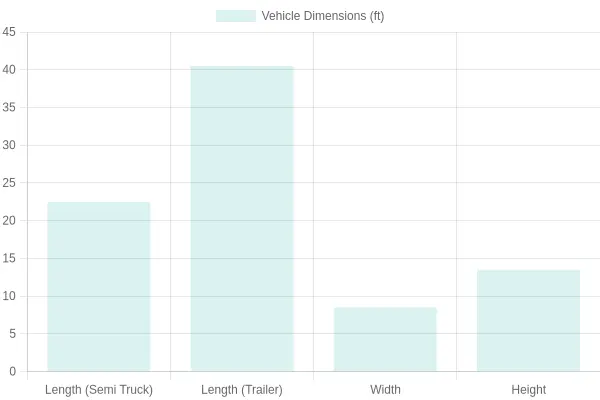
This image provides a detailed comparison of the dimensions of a semi truck and its trailer. Understanding these specifications is crucial for business owners in the logistics industry to make informed decisions regarding their fleet size and operations.
Vehicle Dimensions:
| Dimension | Measurement |
|---|---|
| Length (Semi Truck) | Approximately 20-25 ft |
| Length (Trailer) | Approximately 28-53 ft |
| Width | Approximately 8.5 ft |
| Height | Approximately 13.5 ft |
For more insights on truck and trailer specifications, learn more about reliable cargo trucks and discover weight regulations.
User Adoption Trends in Larger Semi Trucks: 2023 Overview
As the logistics industry continues to evolve, the adoption of larger semi trucks has taken center stage in 2023. This transformation is influenced by several key trends that reflect changing demands and technological advancements.
1. Electrification of Trucks
One of the most notable trends is the electrification of larger semi trucks. Industry leaders are increasingly committing to sustainable practices, driven by stricter emissions regulations and a rising demand for environmentally friendly logistics solutions. Major manufacturers are rolling out electric models, leading to a significant uptick in user adoption as companies seek to meet corporate sustainability goals.
2. Embracing Advanced Technology
The integration of technologies such as AI, IoT, and autonomous driving systems is revolutionizing operations within the trucking sector. Companies are witnessing enhanced efficiency and safety, which encourages businesses to invest in larger, tech-forward semi trucks. The potential for increased operational productivity significantly impacts adoption rates among business owners looking to upgrade their fleets.
3. Enhanced Supply Chain Resilience
The COVID-19 pandemic highlighted the vulnerabilities within the logistics sector, prompting businesses to adopt strategies that promote supply chain resilience. Larger trucks are viewed as essential assets capable of managing larger volumes and diverse deliveries, ultimately leading to increased user adoption as companies seek reliable trucking solutions that can thrive amid disruptions.
4. The Role of Telematics
Telematics and data analytics are becoming indispensable tools for modern fleet management. Through the use of real-time data, companies achieve optimized route planning, fuel savings, and timely maintenance, making larger semi trucks integrated with telematics highly desirable. The demand for these capabilities is leading to a robust increase in user adoption as businesses aim to enhance logistics performance.
5. Regulatory Impacts
Regulatory changes concerning safety standards and emissions are also affecting user adoption of larger semi trucks. Businesses are increasingly inclined to purchase models that conform to new guidelines, making compliance an essential factor in purchasing decisions. As updates occur, companies prioritize acquiring fleets that meet or exceed these regulations to avoid penalties.
Conclusion
In summary, the trends surrounding user adoption of larger semi trucks in 2023 are deeply intertwined with sustainability commitments, the quest for operational efficiency, and the evolution of regulatory standards. As businesses navigate these changes, the investment in larger semi trucks is critical for remaining competitive in today’s dynamic logistics landscape. Learn more about maximizing freight efficiency with weight truck trailers.
With these trends shaping the industry, business owners should stay informed and adaptable, ready to pivot their strategies to embrace new opportunities and technologies. Explore key trucking and trailer dimensions to make informed decisions.
Understanding the legal regulations that govern truck and trailer dimensions is essential for business owners in the logistics and transport industry. Compliance not only ensures safety on roads but also protects businesses from penalties associated with over-dimension or overweight vehicles.
United States Regulations
In the United States, truck dimensions and weight limits are primarily governed by federal regulations as well as state laws. Here’s a breakdown of the essential regulations:
-
Width: The standard maximum width for commercial motor vehicles (CMVs) is set at 102 inches (approximately 2.6 meters). This regulation allows for efficient road use while ensuring drivers can maneuver safely.
-
Height: The maximum allowable height is generally 13.5 feet (about 4.1 meters). This limit helps prevent incidents involving low bridges and overpasses.
-
Length: For single trailers, the maximum length is usually capped at 40 feet. However, combination vehicles-the trucks pulling multiple trailers-can reach longer lengths, depending on state-specific regulations.
-
Weight Limits: Under federal law, the maximum gross vehicle weight is 80,000 pounds (approximately 36,287 kilograms) for vehicles traveling on interstate highways. However, each state might impose additional limits, particularly on local roads. Certain routes may have weight restrictions based on road conditions or infrastructure capacity. For a detailed overview of weight regulations, check the American Trucking Associations.
Canadian Regulations
In Canada, the regulations similarly vary by province but share major similarities with the U.S. system:
- Length Limits: Most provinces set maximum length limits for combination vehicles between 23 to 25 meters.
- Width Limits: Typically, the allowable width is 2.6 meters, though exceptions exist for specialized vehicles.
- Height Limits: The standard height limit is 4.15 meters, with potential variations in certain areas.
- Weight Restrictions: A gross vehicle weight limit of approximately 63,500 kg is common for five-axle trucks in many provinces. Each province may have distinct guidelines influenced by the number of axles and vehicle type.
Importance of Compliance
Failure to adhere to these regulations can lead to fines, vehicle impoundment, or other legal consequences. It is recommended for business owners to regularly check with their state’s transportation agency or FMCSA official regulations to stay updated on potential changes or specific requirements.
By understanding these legal frameworks, transport companies can better navigate road compliance issues and focus on their core logistics operations.
For more insights on maintaining compliance while optimizing your vehicle space, you might find this article on weight regulations useful.
Trends in Average Truck Dimensions Over Time
The trucking industry has witnessed significant changes in the average dimensions of semi trucks over the decades. These changes are indicative of the growing demands for cargo transport and advancements in manufacturing technology. Below is a chart illustrating the evolution of semi truck dimensions from 1980 to 2020.

Average dimensions of semi trucks in feet over the decades.
Average Semi Truck Dimensions by Year
| Year | Average Length (ft) | Average Width (ft) | Average Height (ft) |
|---|---|---|---|
| 1980 | 70 | 8.5 | 13.5 |
| 1990 | 72 | 8.5 | 13.5 |
| 2000 | 73 | 8.5 | 13.5 |
| 2010 | 75 | 8.6 | 13.6 |
| 2020 | 80 | 8.6 | 13.7 |
The chart reveals several key trends:
- The average length of semi trucks has steadily increased from 70 feet in 1980 to 80 feet in 2020.
- The width has remained relatively constant at around 8.5 feet, showing slight increases in some years due to regulatory changes.
- The height has also experienced minimal but consistent increases, signifying adjustments for cargo capacity.
Understanding these trends can help business owners optimize their logistics and manage regulations concerning vehicle dimensions effectively.
When it comes to selecting semi trucks and trailers, business owners must consider various factors to ensure that they are making the right choice. Here are some best practices tailored to your specific business needs, focusing on dimensions, regulations, and practicality:
-
Understand Vehicle Dimensions:
-
Familiarize yourself with the maximum recommended dimensions for semi trucks and trailers. For instance, in the U.S., the maximum length for a semi-trailer is typically 53 feet, with a width limit of 8.5 feet. Be aware of height limits that typically range between 13.5 to 14 feet. Understanding these regulations will help avoid costly penalties and ensure compliance with both federal and state laws.
-
Know the Weight Regulations:
-
The federal weight limit for standard semi-truck and trailer combinations is 80,000 pounds. Ensure that your vehicle of choice can handle the payload you intend to carry without exceeding this limit. Be proactive in familiarizing yourself with state-specific regulations that may impose additional restrictions on weight limits or distribution.
-
Evaluate Your Business Needs:
-
Consider the types of goods you will be transporting. Different loads may require different trailer types (e.g., dry van, flatbed, refrigerated). Ensure the dimensions and weight capacities align with your freight requirements. For specialized loads, additional permits may be needed, which can vary by state.
-
Stay Compliant with State Regulations:
-
Each state has its own regulations that may differ from federal guidelines. Before committing to a vehicle, verify both federal and state requirements for any permits you may need. Check with state Departments of Transportation for current regulations that could affect your vehicle’s operation.
-
Consider Payload Efficiency:
-
Look into maximizing freight efficiency by understanding the ideal ratio of weight to trailer dimensions. This can play a crucial role in minimizing costs and optimizing operational efficiency. Learn more about maximizing your freight efficiency.
-
Plan for Hidden Costs:
-
Be aware of the costs associated with not complying with tractor-trailer weight regulations, which can lead to fines and increased insurance costs. Discover hidden costs of ignoring regulations.
Implementing these best practices will help ensure that you select the right vehicle and trailer combination for your business, keeping you compliant with relevant regulations while meeting your operational needs efficiently.
This thorough and practical approach will help you make an informed decision when choosing semi trucks and trailers.
Conclusion
Understanding the dimensions of semi trucks and trailers is critical for business owners in the transportation industry. Proper knowledge of these dimensions ensures compliance with local and federal regulations, optimizing load capacity, and enhancing the safety of road operations. For instance, awareness of standard dimensions, typically around 70-80 inches in width, up to 53 feet in trailer length, and a height limit of 13.5 feet, can significantly affect routing and logistics planning. Additionally, it plays a vital role in maximizing efficiency while minimizing potential fines due to oversized vehicle regulations.
In light of these factors, we encourage business owners to take proactive steps in understanding their specific needs. For personalized quotes and more information on how our products can help you streamline your freight operations, contact us today. By collaborating with our team of experts, you can ensure that you’re making informed decisions that will optimize your logistics and transportation workflow.
Let us help you navigate the complexities of your trucking needs!